The art of the stage fight
Samurai, ninja and tate on stage
What samurai and ninja really were, why Japanese stage fights are called tate, and what to watch for when swords come out at a samurai show.
Book the samurai night ↗Quick answer
Tate is the choreography of sword fights in Japanese stage and screen drama, built so a fight looks dangerous while staying safe. Samurai were a professional warrior class, and ninja were spies and infiltrators whose black costume owes more to the theatre than to history. At a samurai show you watch that theatre tradition at work, not a record of the battlefield.
What the samurai were
The samurai were the professional warrior class of pre-industrial Japan, retainers who served lords. They trained from childhood in swordsmanship, archery and horsemanship, and also studied literature and calligraphy. Under the Tokugawa shogunate, a long peace turned the warrior estate into a hereditary status and administrative class, and many samurai worked as administrators, police or teachers. After the Meiji Restoration, reforms removed the stipends and privileges that had defined the class, including the right to wear swords.
The sword at the belt
The short, light katana appeared in the Nanboku-cho period and gradually became more common than the longer, heavier tachi. A law of 1629 required samurai on duty to wear two swords, and by the end of the Tokugawa era the pair had become more a symbol of status than a weapon of daily use. The tachi, which had become awkward to use in battle, was kept as a symbol of authority carried by high-ranking samurai, and that symbolism is what stage costume still borrows.
Ninja: spies, not assassins
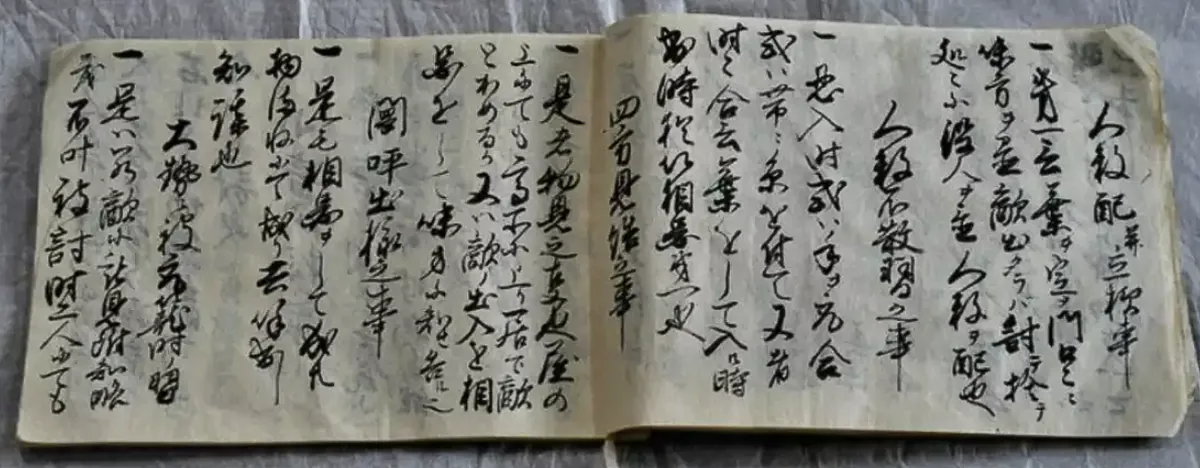
A ninja, or shinobi, was a spy and infiltrator in pre-modern Japan, and there is little evidence that ninja were assassins. During the unrest of the Sengoku period, peasant-warriors in Iga Province and the neighbouring Koka district formed leagues for self-defence and sold their services as mercenaries and spies. After the Tokugawa shogunate was established in the 17th century, they faded from view. The all-black costume and the throwing star came later, from the Edo theatre, where black copied the clothing of stagehands the audience was meant to ignore.
What tate means
Tate, written with the characters for killing and formation, is the performance technique of fighting with bare hands or weapons on stage, in film and on television. It is used mainly for period drama. The term is commonly traced to the leader of the Shinkokugeki troupe, Sawada Shojiro, and a play first performed in 1921, and it came to be read as tate from 1936. Japanese sources compare it to Western stage combat: the aim is a fight that looks real while remaining safe for everyone.
What to watch for
In a choreographed fight every cut, step and reaction is planned, so the skill lies in how convincing the plan looks. Watch how a performer who is hit reacts as much as the one who swings, and how the pace changes between a duel and a crowd scene. The show also has live music, so listen for how the fights and the dances are set against it. None of this needs Japanese. The show on the grounds of Kanda Myojin has no dialogue to follow, and its samurai and ninja routines are told through movement.
Where the show fits
The show combines samurai sword fighting, ninja action, traditional dance and Japanese music, in stories drawn from legend. It belongs to the long line of Japanese period drama rather than to history teaching. Come for the choreography and the setting, and treat the rest as theatre. If you want the legend behind its main chapter, the guide to Taira no Masakado covers it, and the booking guide explains the packages.
Read next: Taira no Masakado: the shrine's rebel
Frequently asked questions
Were ninja real?
Yes, as spies and infiltrators from Iga and Koka, active in the Sengoku period. There is little evidence that they were assassins, and the black costume is largely a stage convention.
What does tate mean?
Tate is the choreography of fights with bare hands or weapons in stage, film and television drama, used mainly for period pieces. It aims to look real while staying safe.
Are the sword fights at the show real?
They are performed fights, not combat. The show is a staged production with choreographed swordplay, dance and music.
Sources